



Decorating a spacious living room comes with a unique challenge: the blank wall. A large vertical surface can make a room feel cold or unfinished if left bare. Simply hanging a small picture often looks out of place against such a vast backdrop.
You need ideas that play with scale and texture to fill the void effectively. From illuminated wood panels to intricate classic molding, the right design adds depth and character.
These concepts focus on creating a focal point that anchors your furniture. Let’s explore 19 distinct ways to transform that empty space into a stunning feature.
1. Mirrored Grid Accent Wall
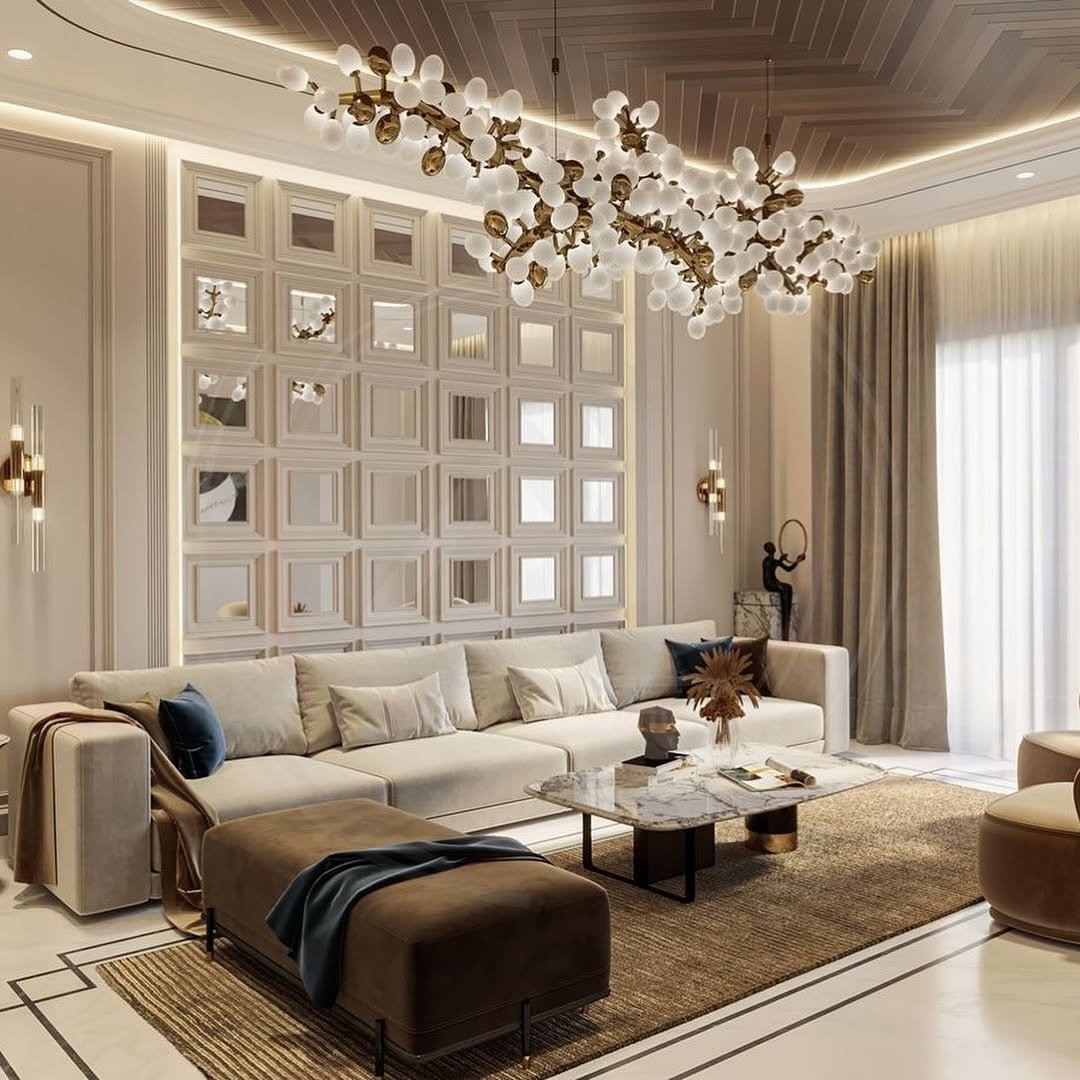
Geometric patterns bring structure to expansive areas while maintaining elegance. Installing a grid of mirrors inside molded frames adds significant depth and helps reflect ambient light.
Soft backlighting edging the panel creates a warm glow that highlights the wall texture. The combination of glass and paint offers a sophisticated contrast against the neutral furniture.
It turns a plain surface into a captivating focal point without overwhelming the senses.
2. Sculptural Marble & Fluted Wall
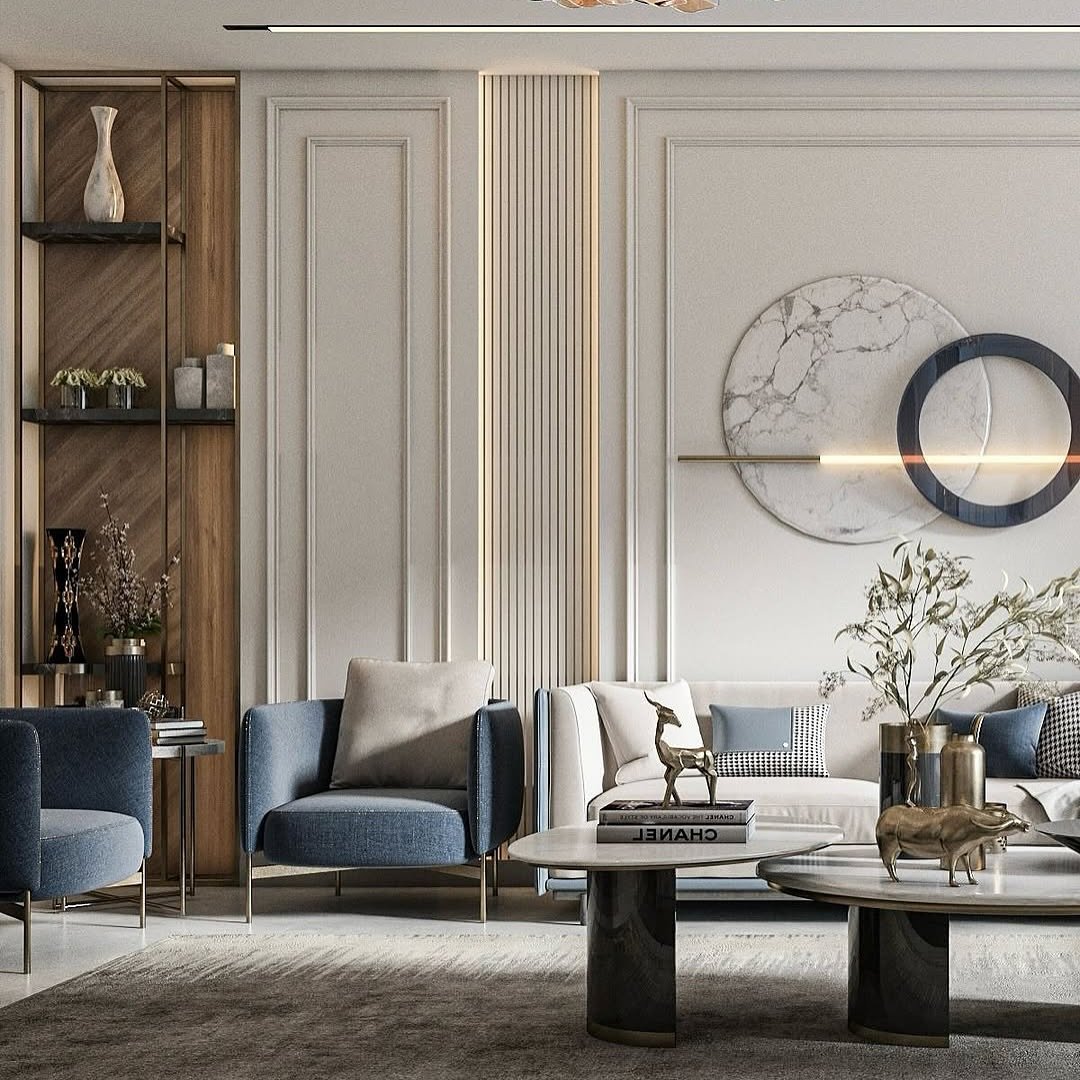
Classic wall molding gets a modern update with a central vertical fluted strip. Layering circular marble art over the paneling breaks the rigid rectangular lines to create movement.
A sleek horizontal light bar cuts through the geometric shapes to add visual interest. The interplay of stone textures and soft vertical grooves creates a balanced, artistic look.
It proves that asymmetry works well in contemporary interiors.
3. Organic Line Art & Texture
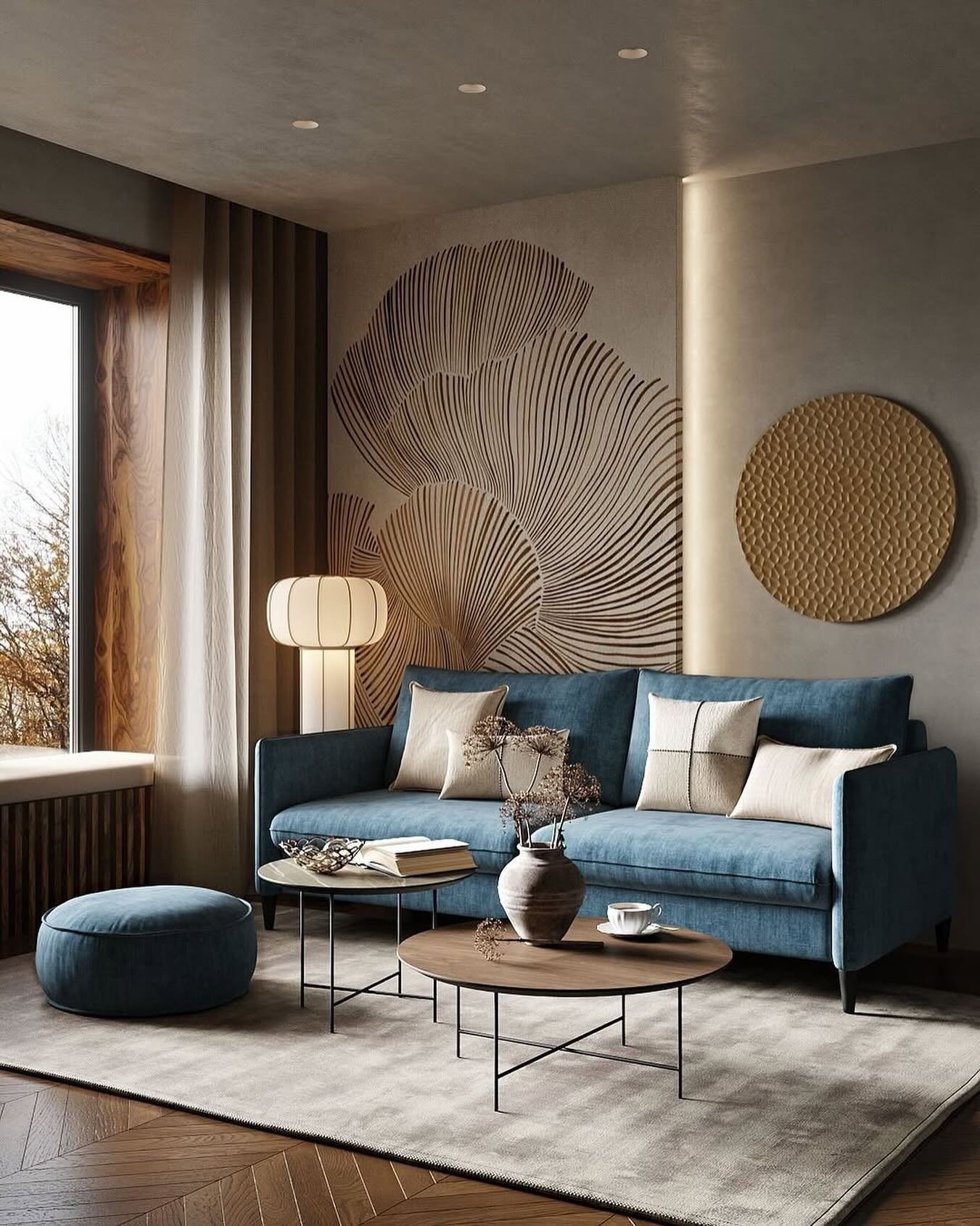
Nature-inspired motifs bring a calming rhythm to modern interiors. A sweeping botanical line drawing dominates the wall, offering visual interest without color saturation.
Balancing this fluidity, a textured circular relief adds a tactile element to the smooth surface. Hidden LED lighting creates a soft vertical divide, enhancing the depth of the plaster-like finish.
It effectively merges artistic expression with minimalist design principles.
4. Symmetrical Groove & Light Panel

Symmetry creates a strong sense of order in spacious interiors. A central panel featuring diagonal grooves draws the eye upward, adding dynamic texture without clutter.
Vertical LED strips flank the textured section to effectively enhance the room’s visual height. Dark wood panels on the far sides provide necessary contrast against the neutral beige tones.
It results in a balanced and refined atmosphere perfect for formal areas.
5. Illuminated Wood Niche Wall
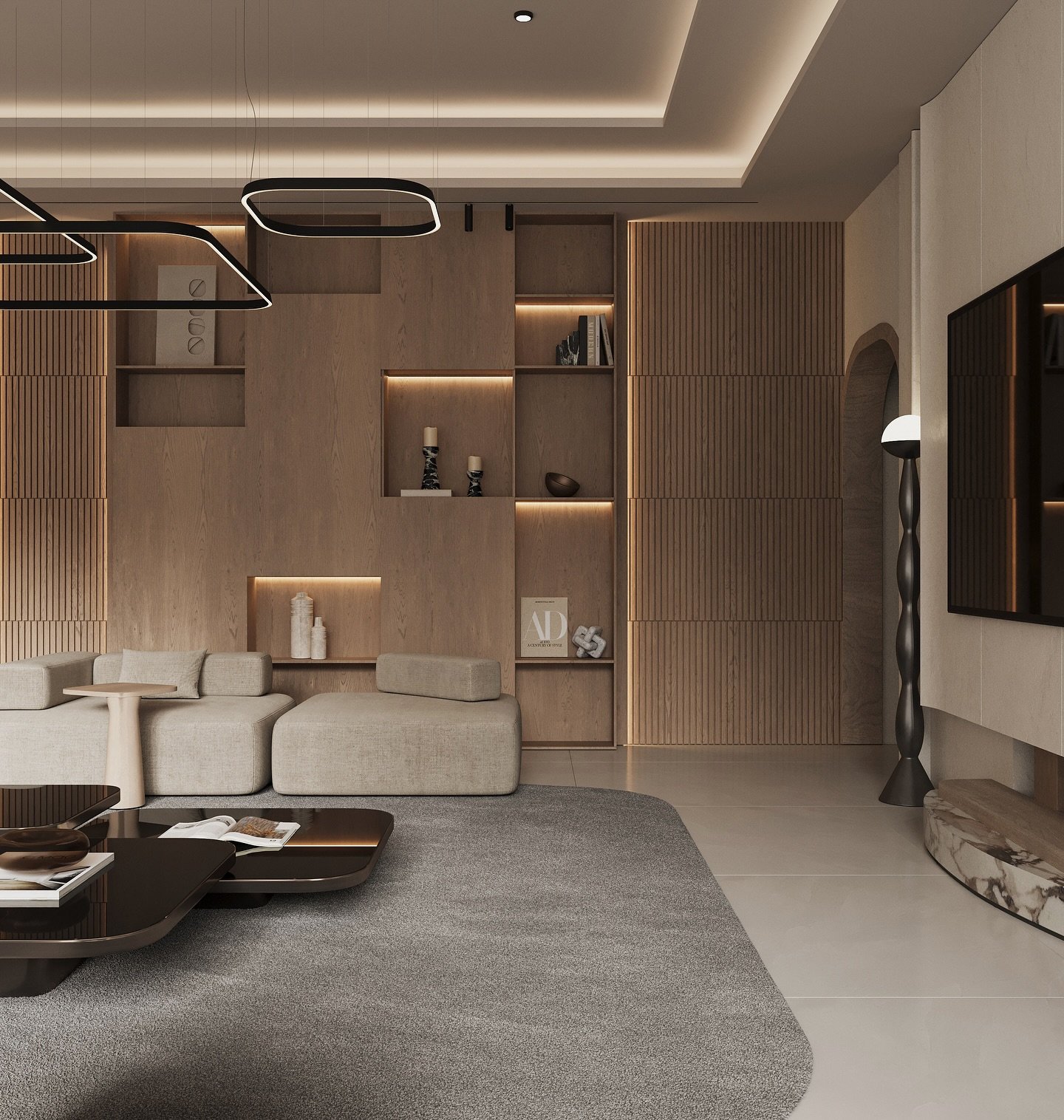
Wood paneling brings immediate warmth and texture to expansive living areas. Integrating asymmetric recessed niches offers a sleek solution for displaying decor without needing bulky furniture.
Hidden LED lighting inside the shelves creates a cozy ambiance while highlighting the architectural details. Mixing vertical slats with smooth surfaces adds variety to the monochromatic scheme.
It perfectly balances storage needs with modern design.
6. Abstract Wood Panel Collage

Transforming a tall surface into a canvas requires bold thinking. An arrangement of geometric wood panels mixed with textured blocks acts as a giant 3D puzzle.
Contrasting natural timber tones with deep black accents keeps the look modern yet grounded. The scattered layout allows the wall to breathe while filling the vertical void.
It is an inventive way to merge art with architecture.
7. Monochromatic Texture & Molding
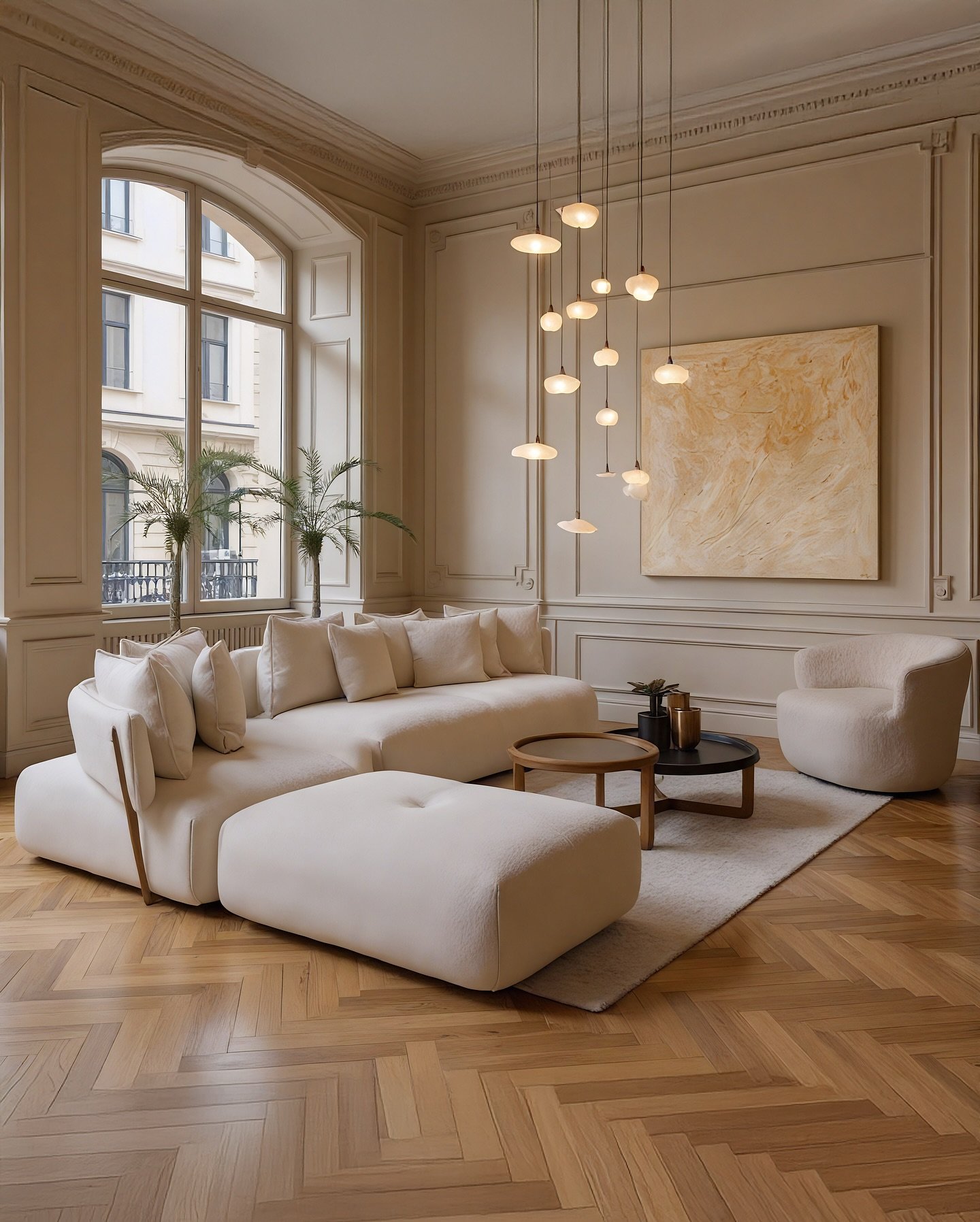
Monochromatic palettes create a sense of serenity in grand living spaces. Placing a large canvas of textured abstract art directly over classic molding adds a layer of modern sophistication.
The subtle color variation allows the eye to appreciate the interplay of shadows and light. It proves that wall decor doesn’t always need bright colors to be effective.
This style creates a timeless and cohesive look.
8. Organic Layers & Fluted Texture
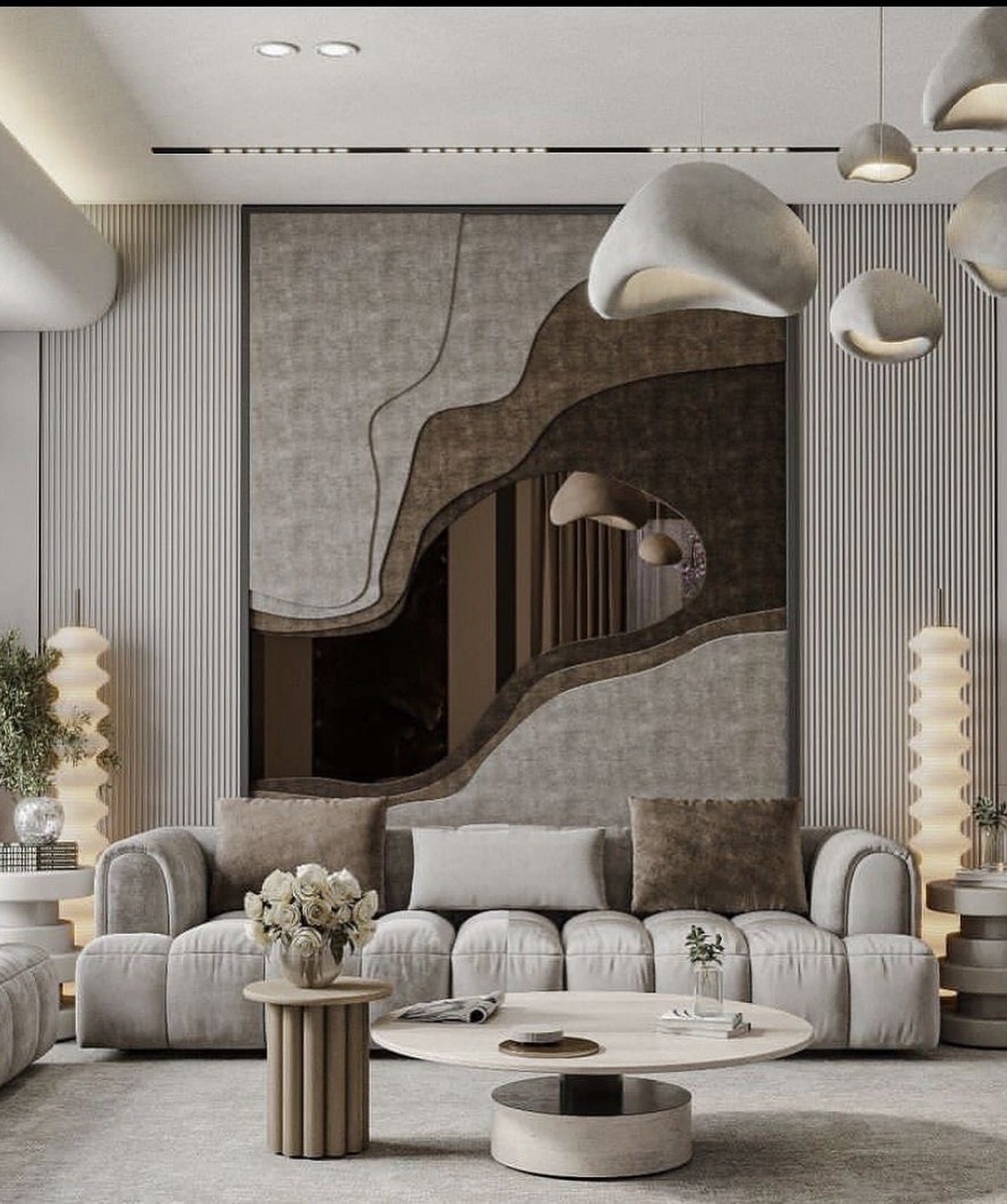
Vertical lines often need a soft counterpart to feel balanced. A massive central artwork features layered organic curves in varying earth tones, creating a fluid visual movement.
The inclusion of a dark tinted mirror deep within the waves adds a mysterious depth to the surface. Surrounding the art with subtle fluted wall panels creates a textural contrast that effectively frames the centerpiece.
It merges architectural detail with sculptural art to anchor the seating area efficiently.
9. Curved Stone Mural Wall

Breaking away from flat surfaces adds drama to an interior. A massive curved wall acts as a canvas for an abstract mural resembling natural stone.
Deep earth tones swirl across the surface to contrast with the linear wood paneling nearby. Echoing these shapes with curved furniture creates a harmonious flow throughout the room.
It turns structural elements into art.
10. Chinoiserie Art & Gold Trim
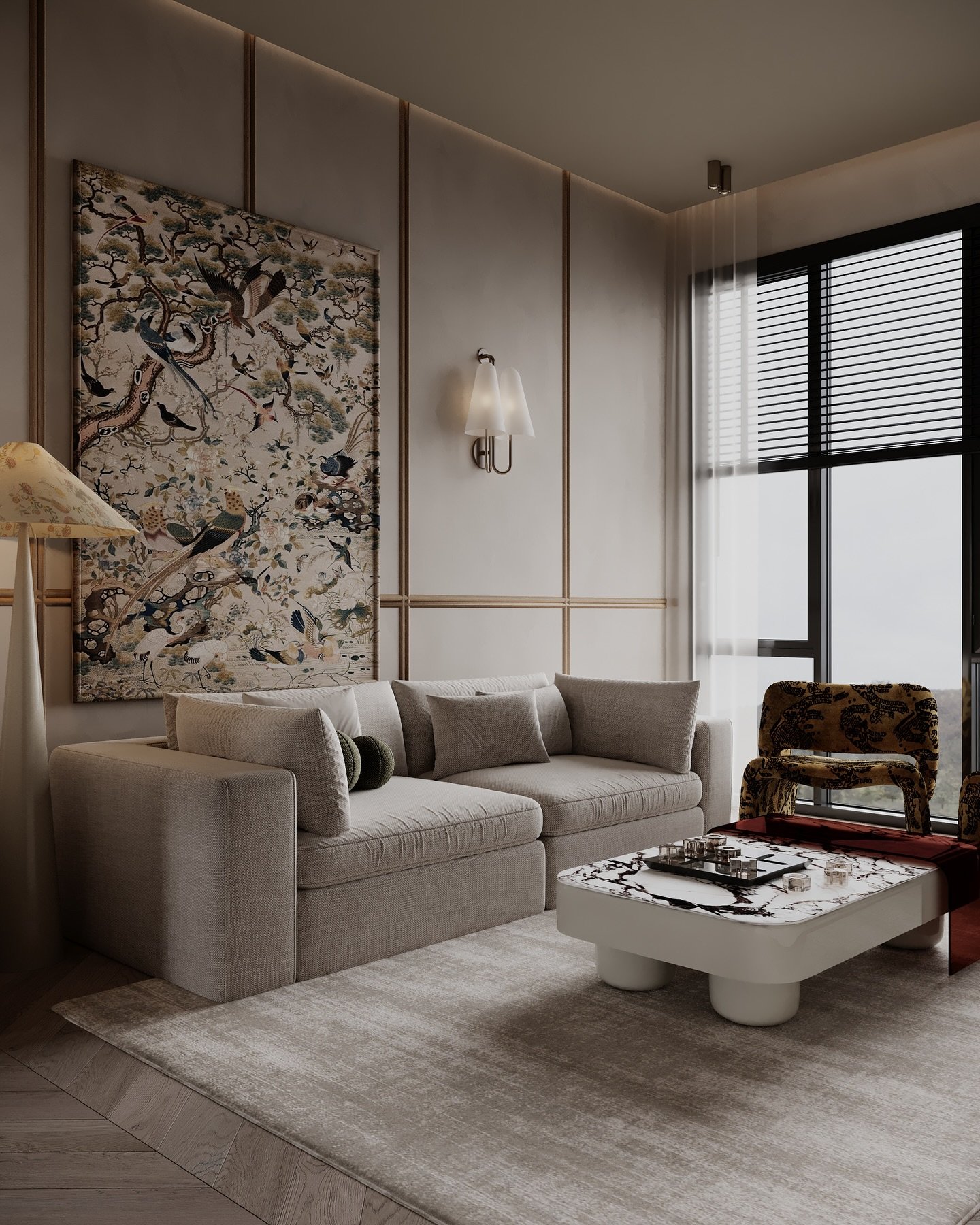
Vertical lines often define the rhythm of a room. Installing thin gold molding strips creates a structured framework that draws the eye upward.
Placing an oversized Chinoiserie artwork within these lines breaks the symmetry with vibrant nature scenes.
A simple wall sconce balances the negative space next to the detailed painting. The mix of metallic accents and intricate patterns adds a layer of luxury without overwhelming the space.
It is a perfect blend of classic elegance and modern layout.
11. Beaded Paneling & Tubular Art
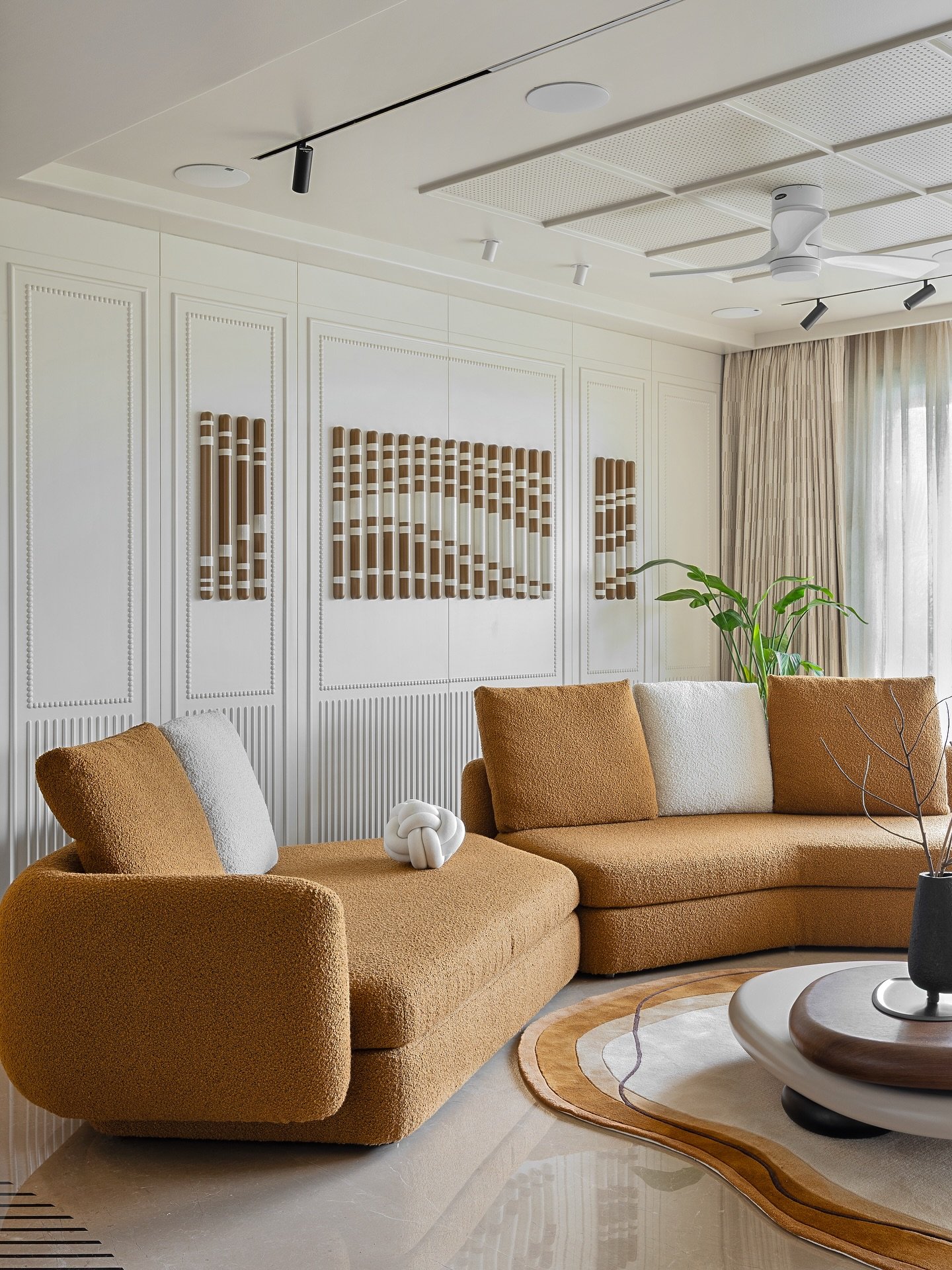
White walls gain character through the use of delicate beaded molding frames. Inside these outlined sections, unique tubular wall art adds a rhythmic, 3D element to the flat surface.
The lower portion features subtle vertical fluting which grounds the overall design layout. Coordinating the art tones with the mustard sofa establishes a warm and cohesive color story.
It demonstrates how texture can effectively replace bold colors.
12. Botanical & Fluted Fusion
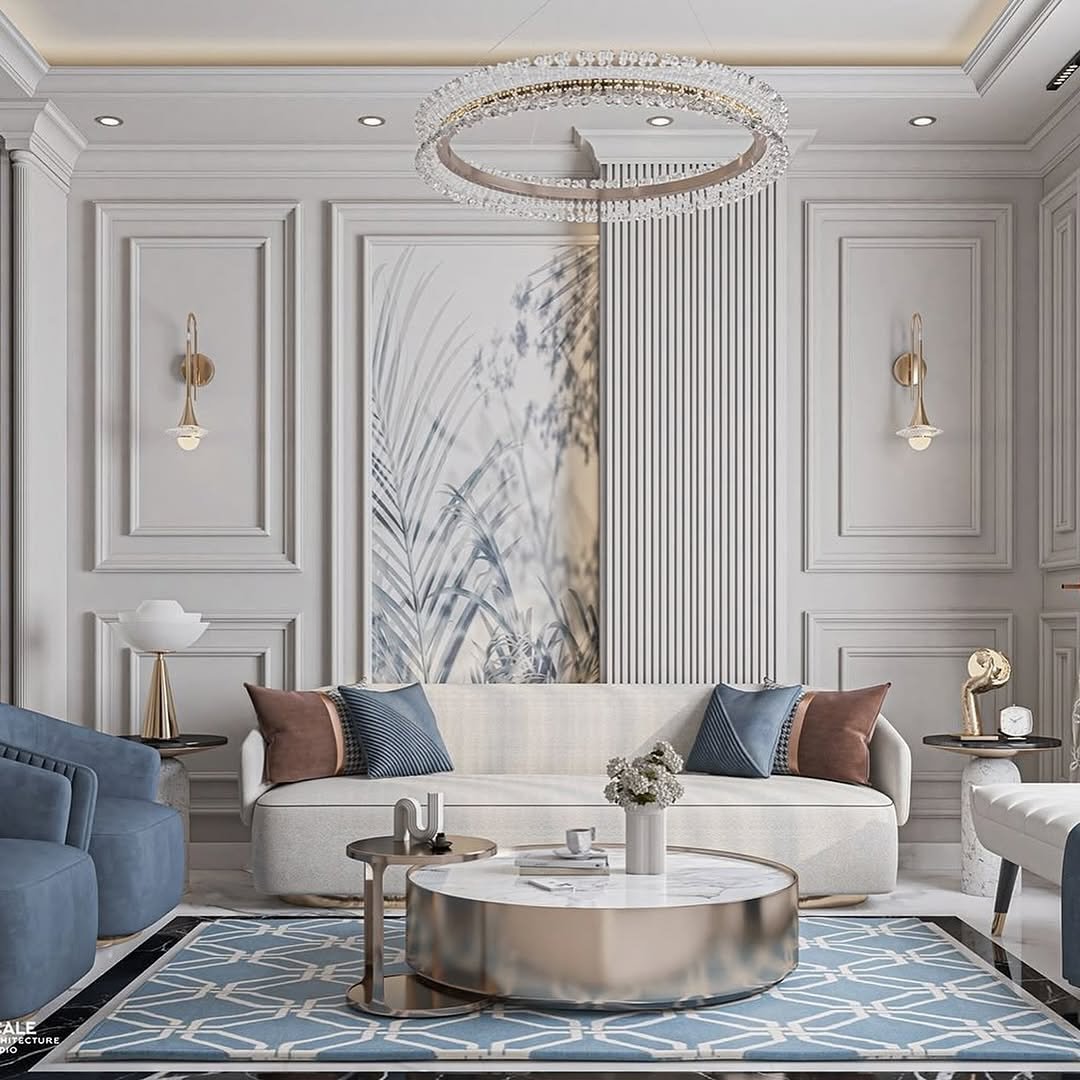
Soft nature themes can effectively soften rigid architectural lines. A central vertical panel features faint botanical imagery that brings a dreamy, garden-like quality to the room.
To add structure without heaviness, a section of vertical fluting runs alongside the art, creating a modern contrast. Flanking this centerpiece are classic molding frames with elegant gold sconces that maintain traditional symmetry.
The subtle blue tones in the wall art perfectly tie in with the velvet furniture and patterned rug. It is a masterclass in layering patterns for a sophisticated finish.
13. Abstract Art & Marble Layers
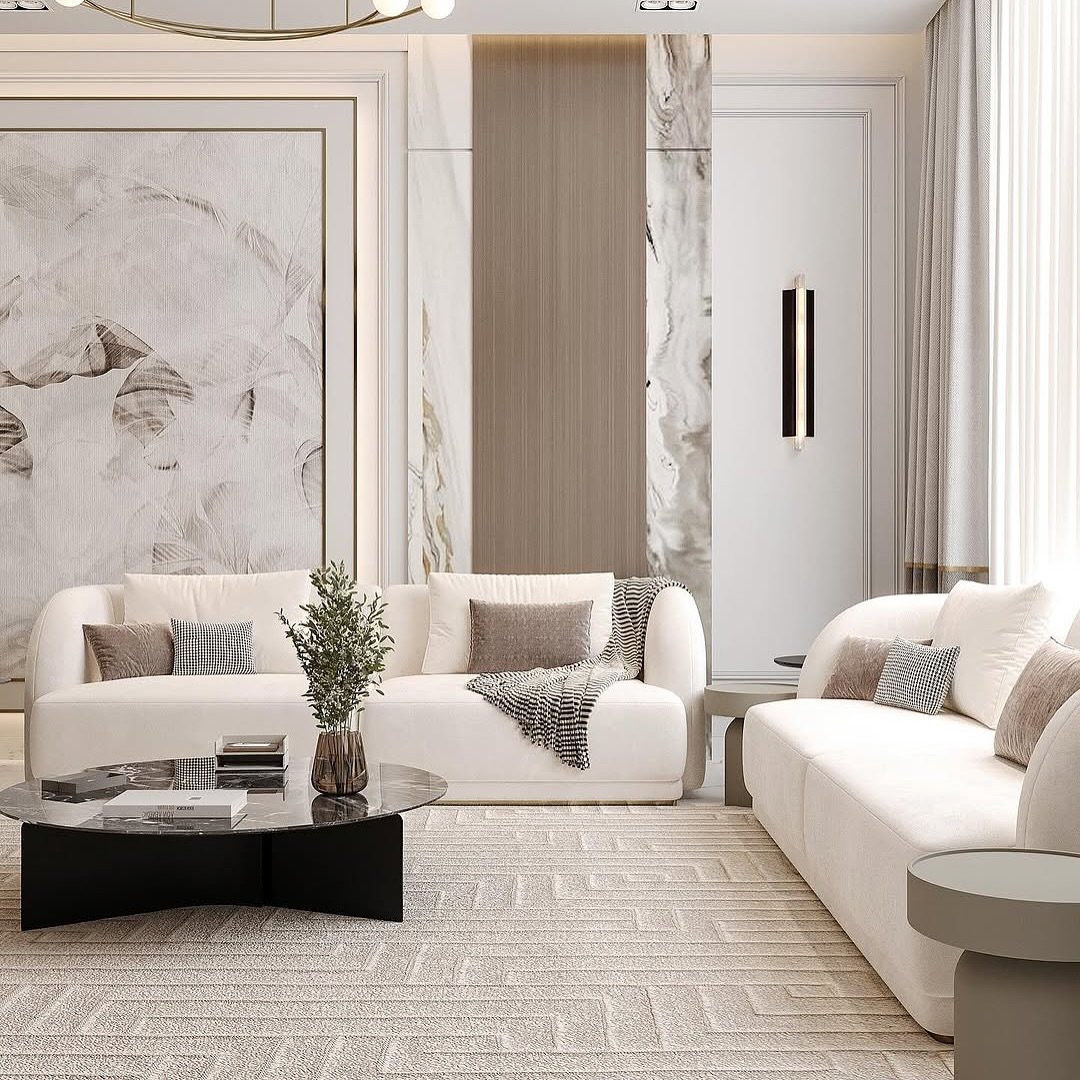
Layering different materials is key to achieving a luxurious depth in wall design. A massive abstract art panel featuring soft, leafy motifs acts as the primary focal point to soften the space.
To the right, a vertical brown fluted strip sits beside a polished marble slab, introducing a rich contrast of earthy textures. A sleek black sconce mounted on the white molding adds a final touch of modern geometry.
This combination creates a sophisticated and multi-dimensional backdrop.
14. Textured Monochrome & Relief Art
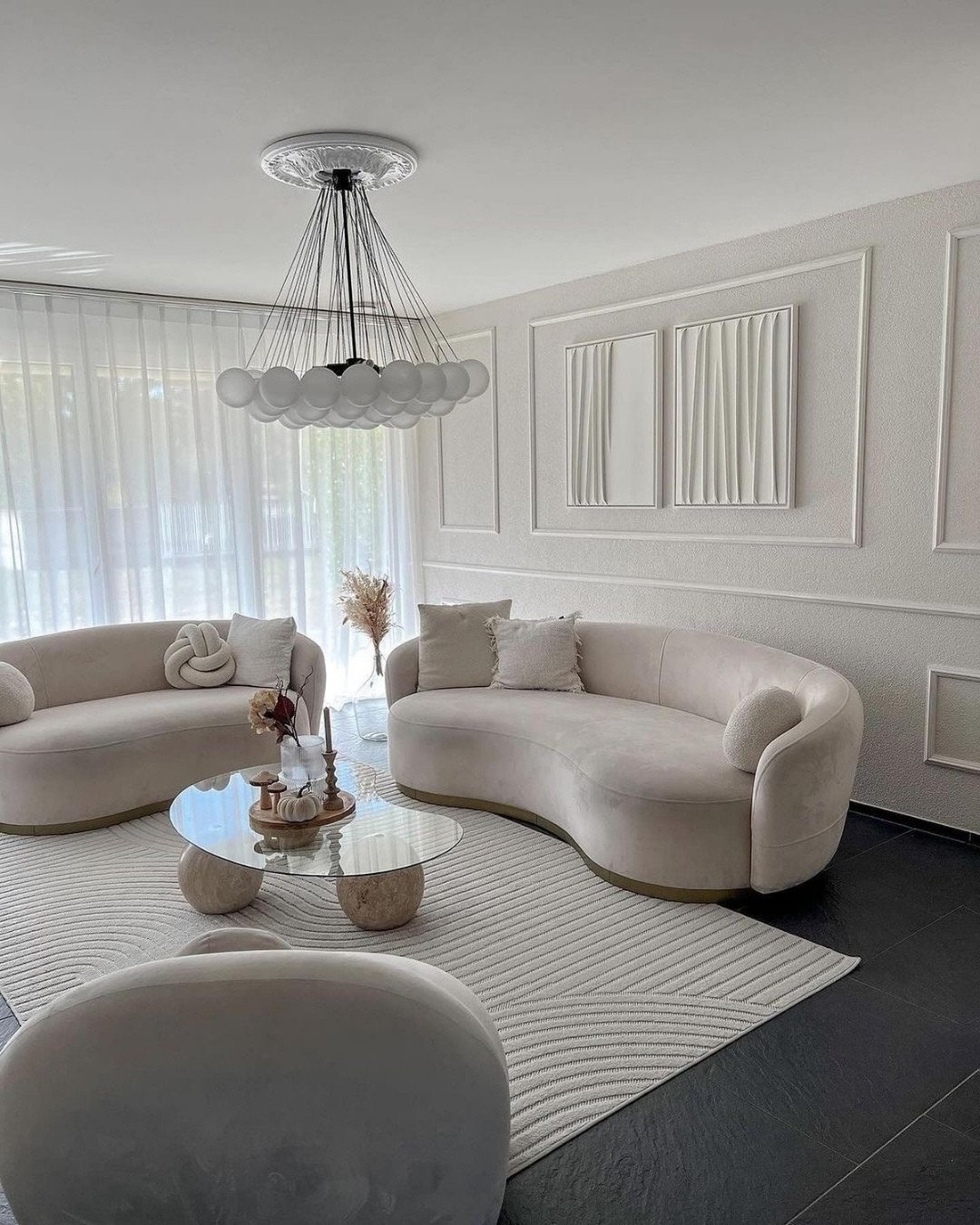
White interiors rely heavily on surface details to remain engaging. A rough textured plaster finish covers the wall, providing a gritty backdrop for smooth elements.
Two white 3D relief panels hang within a large molding frame, creating subtle shadows with their wavy ridges. The curvature of the art mimics the rounded sofas, establishing a gentle flow.
It is a perfect example of minimalist luxury that feels cozy rather than stark.
15. Framed Murals & Graphic Wainscoting
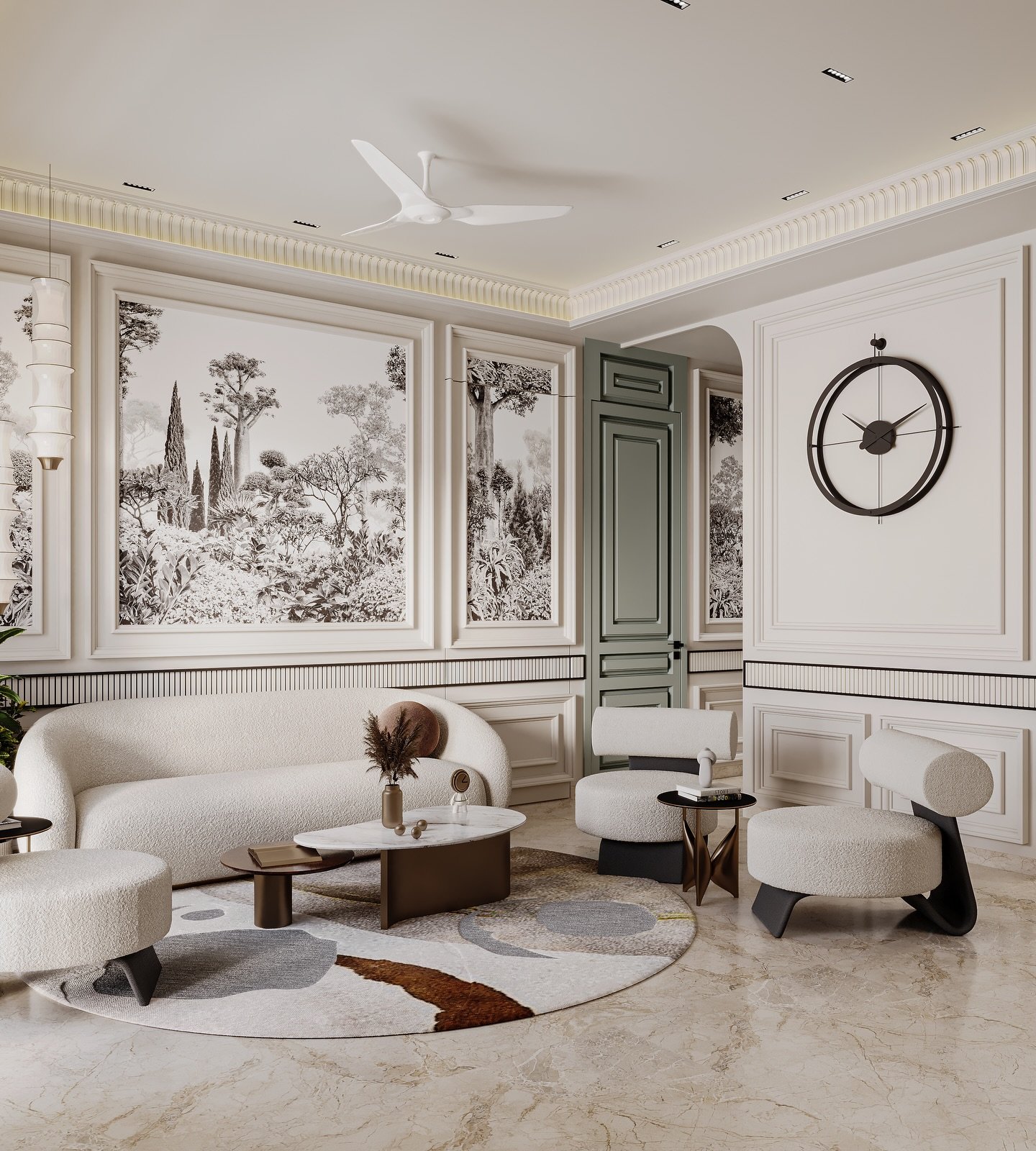
Framing black and white landscape murals within thick molding creates a grand, gallery-like effect. The intricate nature scenes provide depth and a vintage charm that contrasts with the clean white surroundings.
A horizontal band of striped wainscoting anchors the design, adding a sharp graphic edge to the lower wall. Balancing the detailed art, a minimalist oversized clock on the adjacent panel keeps the look contemporary.
It creates a refined space that feels both historic and fresh.
16. Linear Texture & Low-Hung Art
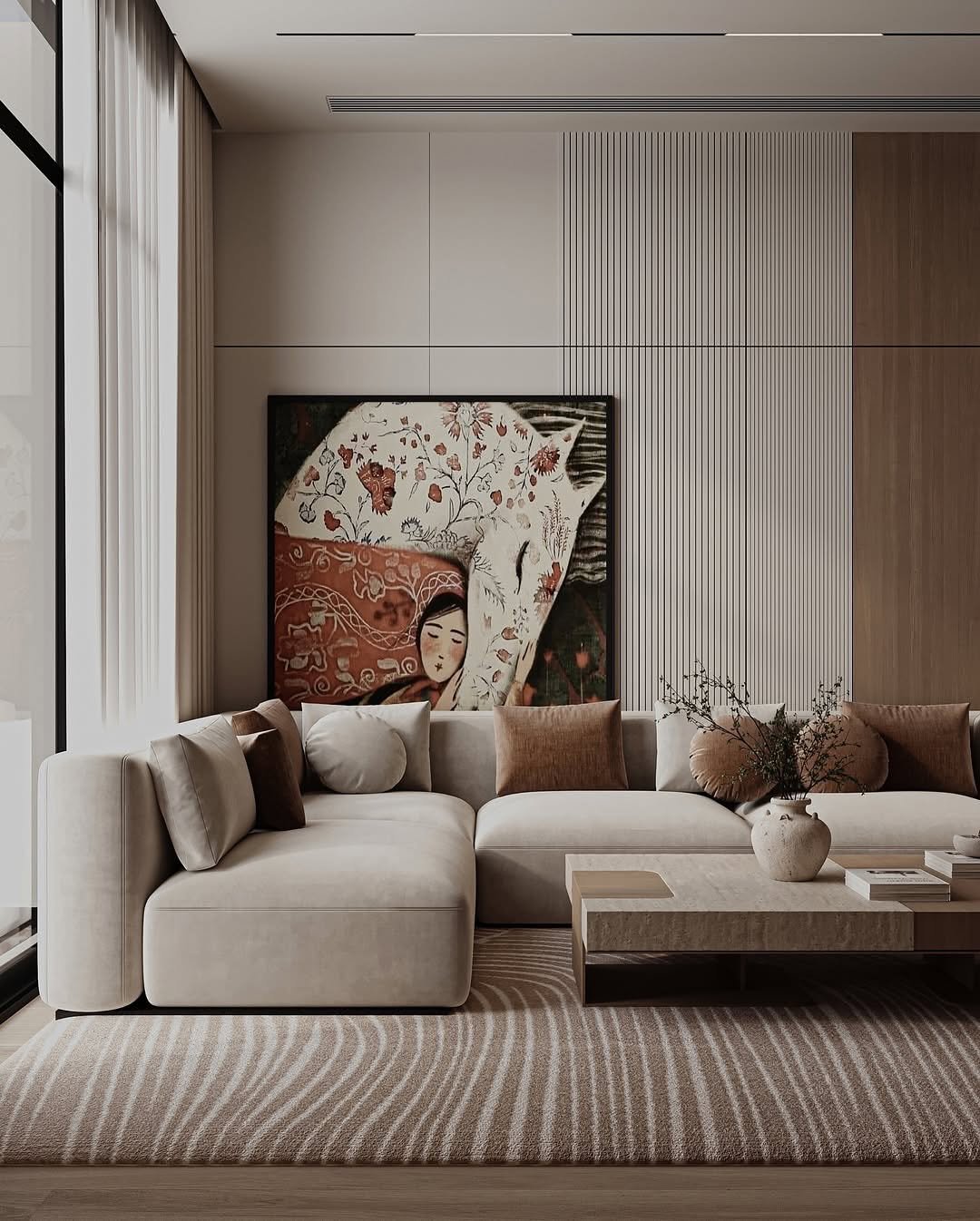
Thin vertical grooves carved into the white panel establish a rhythmic backdrop that creates height. Pairing this texture with a flat wood section creates a pleasing material contrast.
Leaning a large colorful painting low against the wall anchors the seating area intimately. The vivid red and white art tones stand out against the neutral beige palette.
It offers a relaxed alternative to traditional hanging methods.
17. Limewash Texture & Minimalist Art
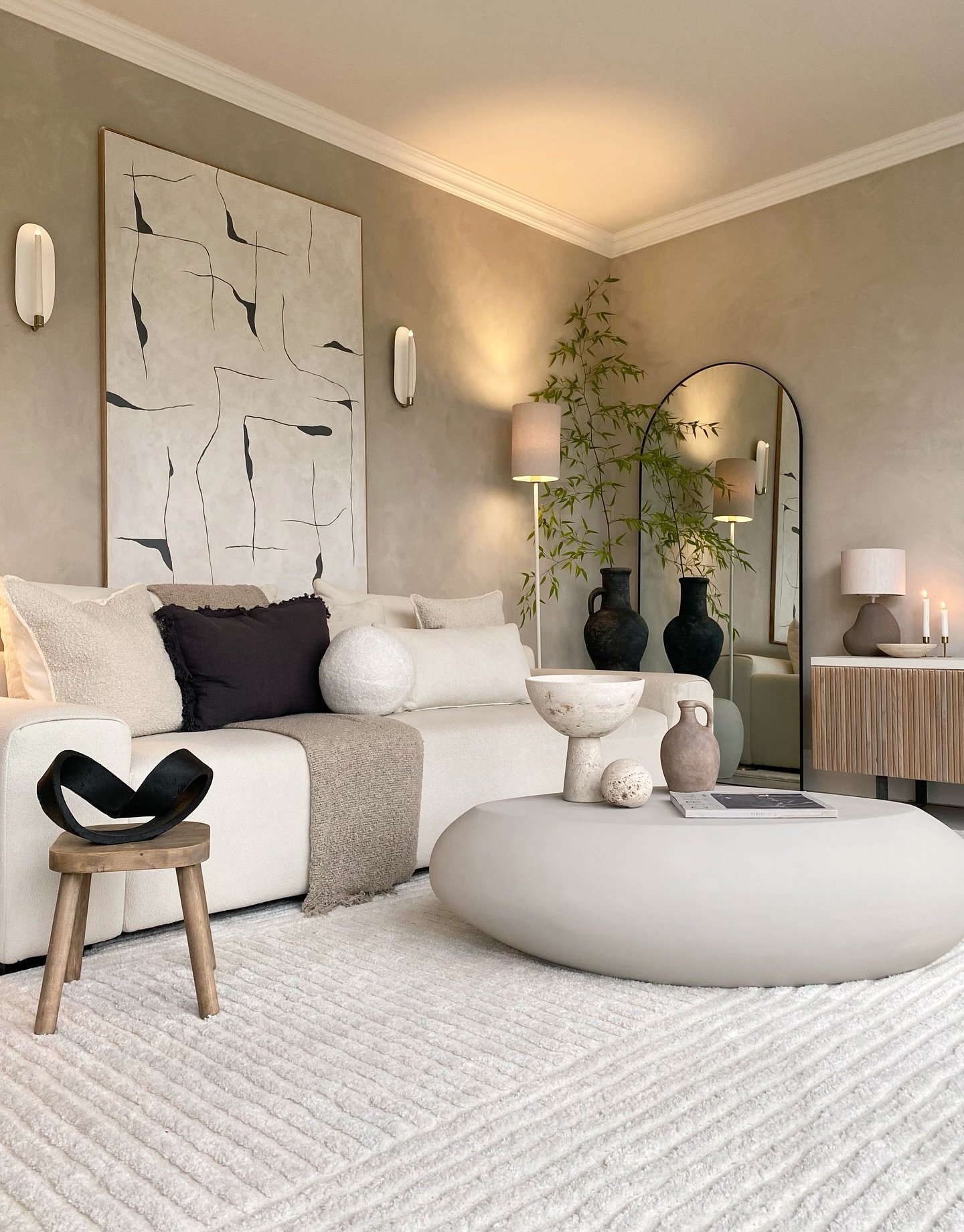
Limewash paint introduces a cloud-like texture that makes large walls feel softer and more organic. Centering a large abstract canvas with simple black brushstrokes creates a striking focal point without adding visual noise.
Minimalist wall sconces flank the artwork to provide balance and warm ambient lighting. Leaning an arched mirror in the corner expands the sense of space and reflects the natural textures.
This approach proves that subtle imperfections in wall finishes can define a luxury aesthetic.
18. Radial Texture & Backlit Panel

Radial patterns create dynamic energy in static spaces. A central panel features a starburst relief texture that draws the eye inward immediately.
Vertical LED strips outline this feature to enhance the 3D effect of the ridges. Classic wall molding on the sides adds symmetry and frames the modern centerpiece elegantly.
It perfectly combines traditional architecture with contemporary lighting techniques.
19. Classic Molding & Gold Mirror
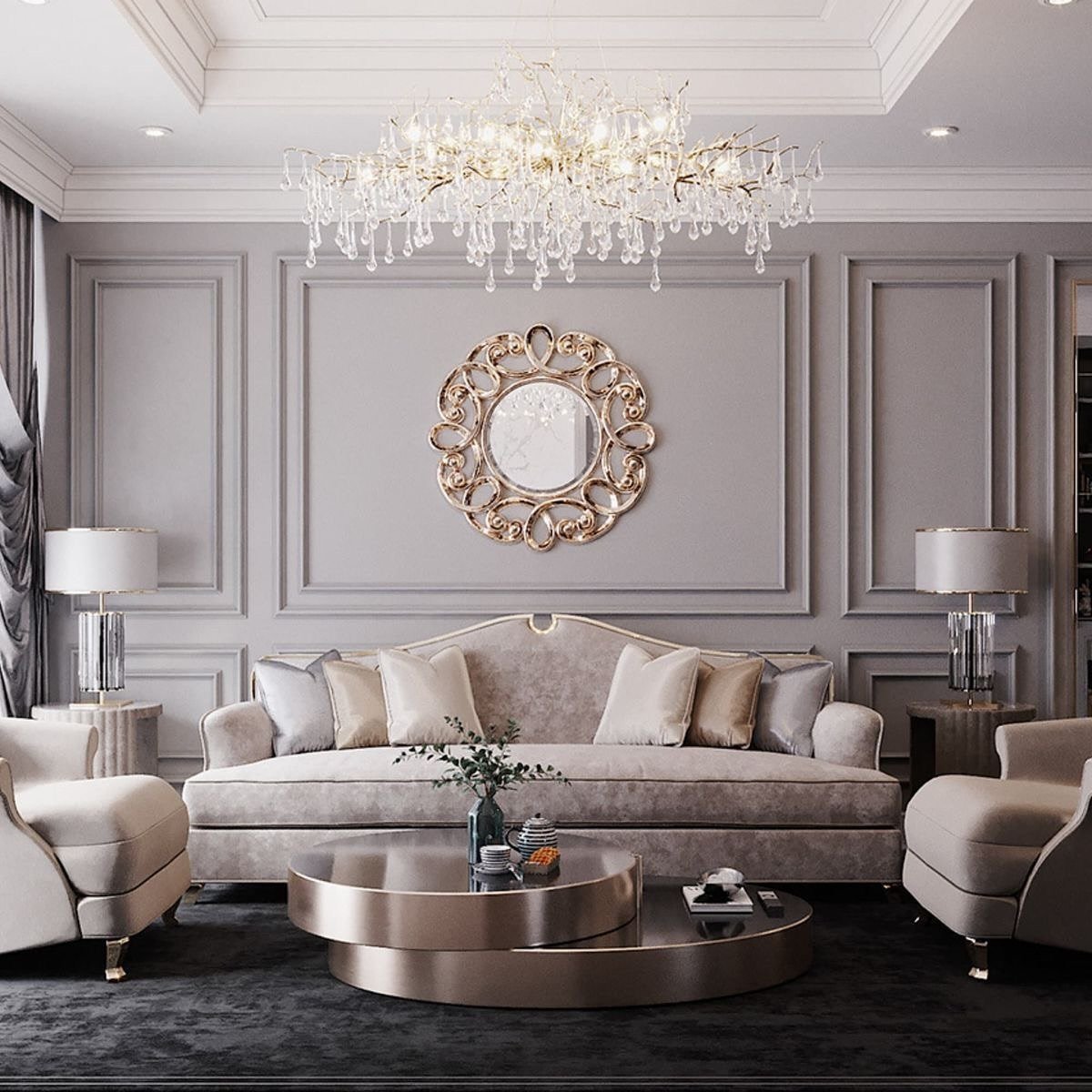
Classic grey walls paired with picture frame molding create a dignified foundation for formal spaces. Centering an ornate gold mirror introduces a touch of royalty that instantly elevates the simple painted surface.
The intricate metallic curves of the frame contrast beautifully against the rigid rectangular paneling behind it. Matching this with a sparkling crystal chandelier ties the opulent elements together cohesively.
It is a traditional approach that feels grand yet inviting.
Conclusion
Styling a large wall is ultimately about finding the right visual balance. Whether you choose the warmth of wood slats or the elegance of stone, the goal is to break up the monotony.
Lighting plays a crucial role in highlighting textures and adding ambiance in the evenings. Don’t be afraid to mix materials like mirrors and metal to create depth.
Start with one clear concept and build your room around it. With the right approach, your large wall will become the heart of the home.